


Rising farm operating expenses in Cambria County, Pennsylvania |
Agricultural diesel prices and farm fuel costs |
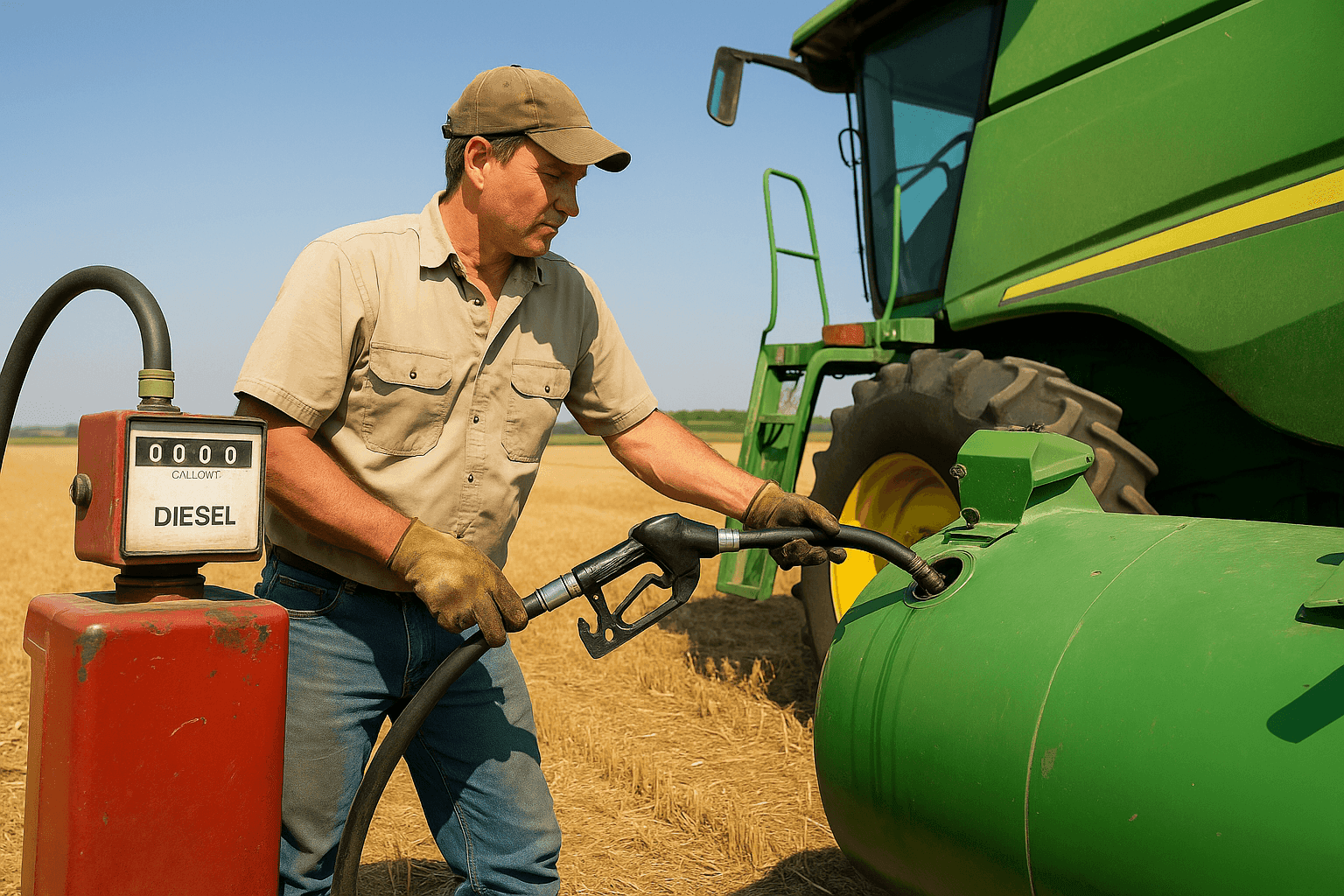
For Cambria County farmers, agricultural diesel prices can turn an ordinary workday into another calculation about what the season will cost.
A tractor still has to cross the field, even when every hour of engine time cuts deeper into the farm budget.
That is the pressure behind rising farm operating expenses across a county where planting, harvesting and hauling depend on dependable equipment.
Unlike a household that can postpone a road trip, a farm has a narrow window to get time-sensitive work done.
Missing that window can be more expensive than buying the fuel.
Diesel powers more than the tractor a passing driver sees from the road.
Depending on the operation, it may also run combines, hay equipment, loaders and the trucks that move crops or supplies.
When agricultural diesel prices climb, those costs reach into nearly every stage of a growing season.
Farm fuel costs also arrive before many farmers know what their crops will earn.
That timing matters in Cambria County, where changing weather and varied terrain already demand flexibility from growers.
A stretch of good field conditions may require long days of work, leaving little room to wait for a better fuel price.
The squeeze is not just at the pump.
Higher transportation costs can affect deliveries of seed, fertilizer and feed, then follow a crop on its trip to market.
For farms that dry grain, heating fuel can add another bill after the harvest equipment has stopped moving.
Those expenses may be easy to overlook at a farm stand, but they help shape the price and availability of local food.
The strain can be especially frustrating because fuel is difficult to replace with a quick change in routine.
A farmer can combine trips, maintain equipment and plan fieldwork carefully, yet still need enough diesel to finish the job.
There is only so much thrift can accomplish when the work itself requires a running engine.
That reality can push other decisions down the road, from replacing aging machinery to improving buildings or expanding an operation.
Delaying those purchases protects cash today, but older equipment can bring repair costs and unexpected downtime later.
For smaller farms, the trade-off may be especially sharp because one large expense can consume money reserved for several other needs.
Farm fuel costs are also only one part of the broader pressure on farm operating expenses.
Equipment parts, labor, insurance and other necessities compete for the same dollars, while the income from a season remains uncertain.
That uncertainty reaches beyond the farm gate into communities around Ebensburg, Johnstown and the county’s rural townships.
Local businesses that serve agriculture have a stake in whether farms can keep investing, repairing equipment and bringing products to customers.
What looks like a private fuel bill can become a community concern.
None of this means every farm feels the same impact.
A livestock operation, a hay grower and a crop farm use fuel differently, and each faces its own seasonal demands.
Still, they share a basic problem: essential work cannot simply stop when an input becomes more expensive.
For neighbors hoping to help, buying directly from local growers when possible keeps attention on the people behind those costs.
It does not erase a diesel bill, but it can strengthen the customer relationships that help farms weather difficult seasons.
As Cambria County farmers plan their next round of fieldwork, agricultural diesel prices remain a practical concern rather than an abstract economic headline.
Every load hauled and every acre worked carries a cost, whether shoppers notice it or not. |
10 Comments
Join the conversation
I appreciate the article but fuel prices affect everyone right now, not just farmers. Truckers, contractors, small businesses. It's a lot for everyone to absorb.
Sue AlbrightFair point, but I think the difference is farmers have to buy it no matter what. A contractor can sometimes pass the cost to a customer or hold off on a job. A farmer can't tell the corn to wait.
The part about delaying equipment repairs is real. My neighbor put off fixing his baler for two seasons to cover other costs and it broke down right in the middle of hay cutting. Timing is everything.
Greg T.Exactly this. A baler going down mid-cutting is basically a nightmare. You lose the window and the hay quality drops fast. That kind of breakdown can cost way more than whatever you saved by waiting.
Honest question, is there any kind of state program that helps farmers offset fuel costs? Seems like there should be something for small operations.
rjohnstown88There is a federal ag diesel tax refund program where farmers can claim back a portion of the federal excise tax on off-road diesel. Not a huge amount but it adds up. Worth looking into if you know any small operators.
People have no idea what goes into that $4 bag of corn at the farm stand. Diesel, parts, time. I try to buy local whenever I can and this is exactly why.
Patty KowalskiSame here. Honestly I had no idea about the grain drying costs until I talked to the guy at our local farm stand last fall. It never ends for them. Buying direct is the least we can do.
My uncle farms out near Ebensburg and he said fuel is the one bill that shows up no matter what kind of season you're having. Good or bad harvest, the tractor still needs to run.
Dale M.That's a good way to put it. Rain or shine, good prices or bad, the fuel bill is just always there. My dad used to say the tractor doesn't care what corn is selling for.