


Saint Francis Poverty Simulation Builds Compassion in Loretto |
Students across health and social-service fields explore the pressures families face when resources are limited |
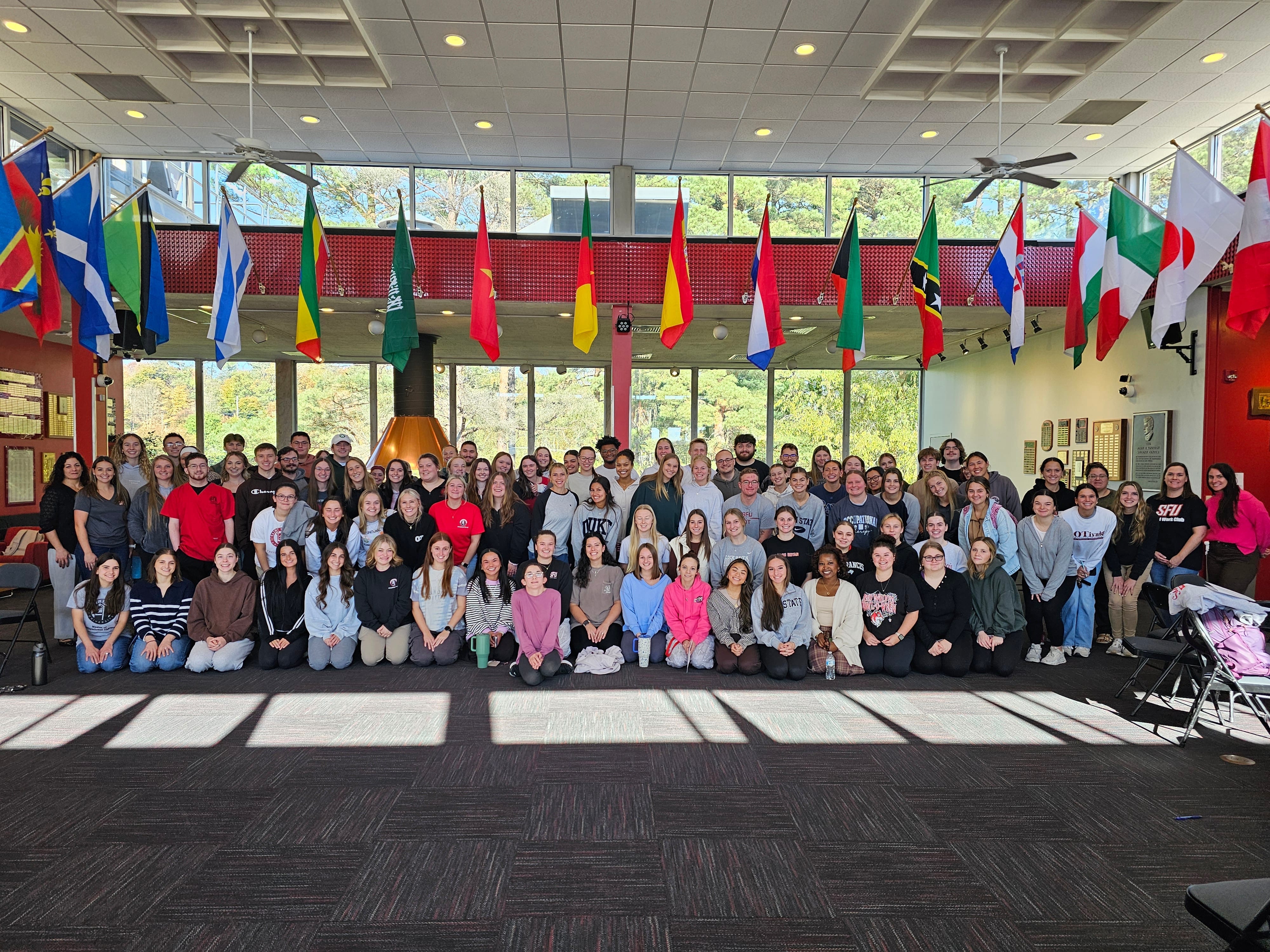
Photo: Saint Francis University — participants in the 2026 poverty simulation.
A classroom exercise at Saint Francis University asked future care professionals to consider the circumstances behind a person’s immediate needs.
During an October 23 poverty simulation at the JFK Student Center, students and faculty explored how limited resources can complicate housing, healthcare and family responsibilities.
Participants came from nursing, physical therapy, social work, occupational therapy and public health.
The event encouraged them to think about competing needs and the pressures that can shape everyday decisions.
Looking beyond the first problem
The exercise connected different fields around a shared question: how can professionals respond more thoughtfully when a family faces financial hardship?
Participants considered scenarios in which meeting one urgent need could make another harder to address.
The point was to encourage reflection on assumptions and on the physical, emotional and mental effects of difficult circumstances.
For Cambria County readers, the value is easy to recognize in principle: people bring their lives, responsibilities and resources into every care setting.
Understanding that broader picture can change the questions a professional asks and the support a team considers.
The university framed the activity around human dignity, service and collaboration.
Learning to work as a team
A person seeking help may encounter several professions, each approaching the same situation with different training.
Learning alongside other disciplines gives students a chance to consider how those perspectives fit together.
That approach also appears in Saint Francis’ nursing education, where clinical reasoning, ethics and interprofessional practice are part of the department’s stated mission.
The nursing curriculum combines scientific preparation with attention to communication, cultural competence and care for individuals, families and communities.
Hands-on practice offers room to ask questions and receive feedback before taking on professional responsibilities.
Practical training beyond one event
The university’s Experiential Learning Commons provides another setting for that work.
Its simulation suites recreate hospital environments, including emergency, intensive-care, patient, maternity and examination rooms.
The facility also includes a skills lab and a simulated apartment where students can consider the challenges of providing care in a home.
Those spaces allow different kinds of learners to practice in settings designed for teaching rather than actual patient treatment.
The commons also supports continuing-education training opportunities for regional first responders and healthcare professionals.
The October poverty simulation took place at the JFK Student Center; the commons is separate background on the university’s broader approach to experiential learning.
A focus on service and dignity
Social work education offers a related perspective on the connection between individual circumstances and the systems around a person.
The university describes field experience, advocacy and community engagement as parts of that preparation.
Its social work program currently has a teach-out plan for existing students and is not accepting new applications beginning with the 2026–27 academic year.
Readers exploring degrees should check current program availability rather than assume every field represented at the simulation remains open to new applicants.
The nursing and learning-commons information provides additional ways to understand how the campus prepares students for work involving real people and complex needs.
Families considering health-related education can ask how a program teaches communication, teamwork and reflection alongside technical skills.
Those questions help turn a campus visit or admissions conversation into something more useful than a list of courses.
The encouraging local development is a learning experience that asks students to listen more closely and think beyond the immediate task.
Compassion becomes more practical when future professionals make time to understand the person who will eventually be sitting across from them.
Sources and helpful links: October simulation report · Nursing education · Experiential Learning Commons · Social work program information |
 Photo: Saint Francis University nursing program. Program image; not a photograph of the October poverty simulation. |
1 Comment
Join the conversation
My daughter is in the nursing program at SFU and she mentioned this simulation. She came home that day thinking differently about her patients. Really glad the school is doing things like this.